
The Communist Party of Israel (Maki), the communist-led Democratic Front for Peace and Equality (Hadash), and the Joint List have intensified their campaign ahead of Israel’s 27 October 2026 parliamentary elections.
Communist Party of Israel-backed Joint List intensifies campaign ahead of Knesset elections
Their final-week mobilisation has combined calls for higher voter turnout with opposition to the Netanyahu government, a campaign against racism and discrimination, and demands for peace and social equality.
Cassif condemns racism and calls for support for the Joint List
At an election rally in Jaffa on 22 October, Hadash MK and Communist Party member Ofer Cassif argued that racism in Israeli society serves the interests of wealthy and politically powerful groups by dividing disadvantaged communities and preventing them from organising a common struggle for social and economic justice.
In a post following the rally, Cassif identified Arab citizens, Mizrahi Jews, Ethiopian Israelis and immigrants from the former Soviet Union among the communities affected by discrimination and exclusion. He argued that divisions based on origin weaken collective resistance to exploitation, perpetuate inequality and deny people decent working conditions and quality of life.
Cassif presented the Joint List as the only political force fighting all forms of racism and advocating distributive justice and equality for everyone. He concluded with a direct electoral appeal: “This time — only Joint List!” His message places the alliance’s campaign within a broader class-based argument that racism and discrimination benefit privileged groups by fragmenting working people.
Joint List urges greater turnout to challenge Netanyahu
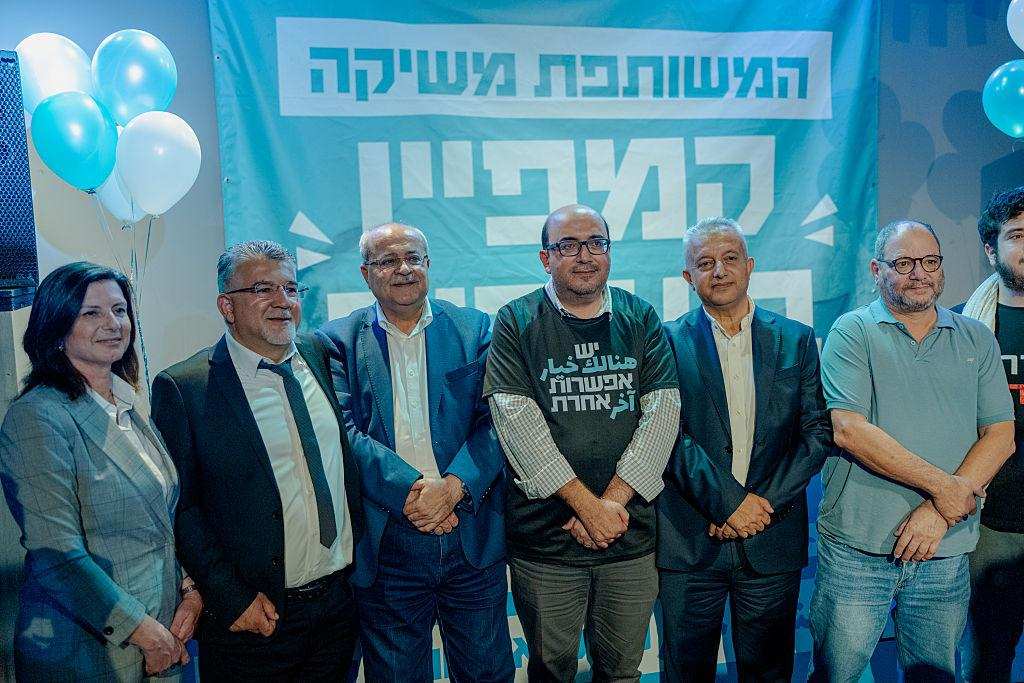
At a press conference in Haifa on 20 October, Joint List representatives Yousef Jabareen of Hadash, Ahmad Tibi of Ta’al and Sami Abu Shehadeh of Balad urged Arab citizens to increase their participation in the elections.
The alliance said it aimed to secure at least 10 Knesset seats and argued that stronger representation could help prevent Netanyahu’s right-wing coalition from remaining in power. Its campaign has focused on violence and crime in Arab communities, home demolitions, socioeconomic discrimination and the protection of religious sites in Jerusalem.
Tibi identified removing Netanyahu, National Security Minister Itamar Ben-Gvir and Finance Minister Bezalel Smotrich from government as an immediate priority. He also called for repeal of the Kaminitz Law, which facilitates the demolition of homes built without permits. The alliance has linked its opposition to the government with demands for an end to the wars, a political horizon for the Palestinian people and equality for Palestinian citizens of Israel.
Campaign headquarters targeted by right-wing activists
The campaign has also been marked by an incident at the Left Bank club in Tel Aviv on 15 October. Activists identified with the far-right Otzma Yehudit party entered the building, which houses the Joint List’s Hebrew-language campaign headquarters and offices associated with Hadash and the Communist Party of Israel. The incident took place during a film screening organised by the Mesarvot network, which supports Israeli military refusers, and was followed by confrontations.
Cassif called for an investigation into the incident, while Hadash activists filed a complaint with police. The party condemned the episode as an attempt at political intimidation during the election campaign.
A final appeal centred on equality and representation
In the campaign’s final days, Maki, Hadash and the Joint List have sought to connect electoral participation with wider questions of class, racism and political representation. Cassif’s Jaffa speech emphasised the need for disadvantaged communities to overcome divisions, while the alliance’s broader campaign has focused on challenging the government, opposing discrimination and defending the political rights of Palestinian citizens.
The Joint List’s appeal is therefore not limited to replacing the current government: it also presents a vote for the alliance as support for a common struggle against racism, exploitation and social exclusion.