
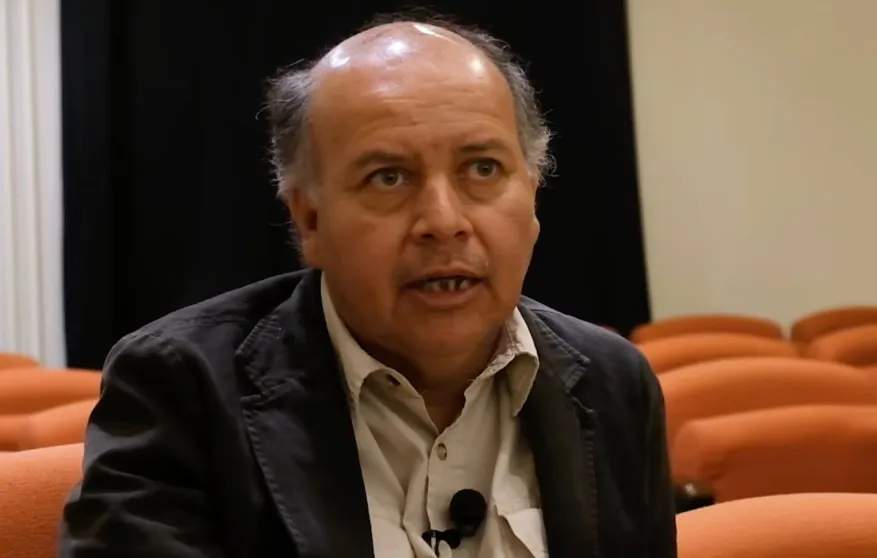
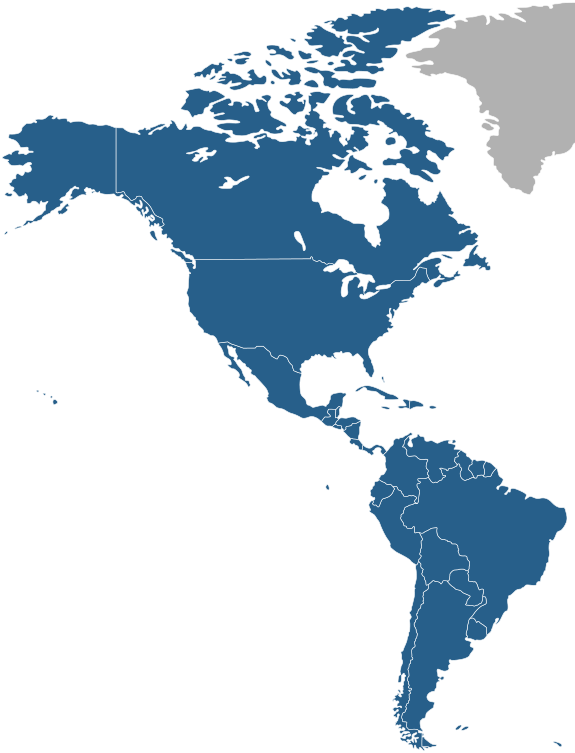
During the 24th IMCWP Working Group meeting held in İstanbul, soL TV -the Youtube channel of the soL News Portal- spoke with Pavel Blanco, General Secretary of the Communist Party of Mexico. In this interview, he assesses the latest developments on the recent imperialist aggression against the Americas.
Blanco: peoples have the duty to fight against capital, against imperialism.
You are in Istanbul at this moment for a meeting of the Communist and Workers' Parties of the world. And of course, the entire world today is discussing this imperialist aggression, especially in our region, in the Middle East, due to the ongoing wars. However, until recently, the focus of imperialist aggression—specifically from the 'Yankees'—was actually on the Latin American continent, with what has happened in Venezuela, the threats to numerous Latin American countries including Mexico, and also with what is still happening with Cuba. First, I would like to start with how this aggression—this new policy of the Trump administration—is reflected in Mexico. How is it felt in a political sense, but also how is it understood by the public? How is it being debated?
Well, since Trump's first administration, he wielded the threat of imposing tariffs on the Mexican state. Primarily, if there was no agreement or submission to his anti-immigrant policy. The government of López Obrador at that time submitted to that anti-immigrant policy and, following the threat of tariffs, accepted the request to become a 'safe third country' and a containment barrier against the wave of labor migration heading from Central American countries toward the United States.
At the start of the second Trump administration, the threat of tariffs was wielded once again for several reasons. First, the fight against drug trafficking; and secondly, a set of economic measures that the Mexican state should adopt, such as lowering sovereign barriers regarding the presence of troops, drones, and security instruments inside Mexican territory, as well as ending the oil trade relationship with Cuba. Unfortunately, in all these cases, the Mexican state—the social-democratic government of Sheinbaum—has yielded, despite a certain rhetoric that claims this is not the case.
Mexico respects its sovereignty, but well, without complying with legal deadlines, the extradition of several drug lords is allowed to proceed. We, of course, stand for the drug lords and criminals paying for their crimes, but let them serve their sentences in Mexican prisons. We oppose extradition on principle. We know that extradition has been used by the United States not in legal terms of the fight against drugs, but in political terms. One of these cases is that of the FARC commander, Simón Trinidad, who remains imprisoned in the United States, but there are also many other cases.
And well, there has been a series of concessions. It is said, 'no, the United States does not dictate terms to the Mexican government,' but well, in January, the shipment of oil tankers from Mexico to Cuba ceased—which are not gifts, but rather a commercial relationship, right? Well, effectively, the pressures of US imperialism on the people of Mexico are very strong. The threat of aggression exists. As far as we understand, it is not simply a threat. The United States has always had territorial and economic ambitions regarding Mexico. Let us remember that in 1847, it appropriated more than half of the territory, and well, their expansionist zeal, as demonstrated by the Trump administration regarding Alaska and Venezuela, we do not doubt is also real regarding Mexico. Therefore, we try to warn that the possibility of imperialist aggression is possible, but we must understand what it is about. It is not an anti-American position, because the people and workers of the United States are our brothers; it is a policy against imperialism, against imperialist ambitions, and also against the 'sell-out' policies of the Mexican government.
To speak a bit more about the relationship between Mexico and Cuba: Of course, the commercial relationship between the two countries was extremely important for Cuba, the economy of the socialist island. As you said, that relationship has been greatly weakened by the political pressures of the imperialists of the Trump administration. But also in Mexico, for decades, there has existed a very strong movement of solidarity with Cuba, of which you and the Communist Party of Mexico form an important part of those solidarity efforts. What has the solidarity movement done in these last few months against this US aggression?
Well, first of all, let’s put the following into context: to substitute the issue of not sending oil tankers—thereby failing to comply with interstate agreements between Cuba and Mexico—the Mexican government has presented a humanitarian aid campaign for Cuba.
Of course, all solidarity with Cuba is positive from our point of view, but it seems to us that Cuba does not fall into the category of states that require humanitarian aid. That is to say, it is not experiencing a catastrophic situation caused by the State or the revolutionary process, nor by a natural or environmental tragedy, but rather it is the result of the imperialist blockade. Therefore, we do not accept the category of humanitarian aid, and even less so when it is used to mask the concession—the surrender—of Mexican sovereignty.
In 1938, as a result of the oil workers' strikes, the general strike held in solidarity with the oil workers, and the struggle of the Mexican people, oil was expropriated. Since 1938, oil has been national property so that Mexico can sell it, trade it, or give it away to whomever it deems fit. Therefore, accepting pressure from the United States is to completely surrender Mexico's sovereignty.
Now then, since January 3rd, when the U.S. imperialist aggression against Venezuela took place—where unfortunately there was no adequate resistance, with the exception of the Cuban revolutionaries who fell heroically there—we all know that a campaign of threats and aggressions against Cuba began. When I speak of aggressions, we refer to the Trump administration's memorandum to prevent the oil trade and to energetically suffocate Cuba. Well, an important wave of solidarity was unleashed among the people of Mexico, focused on this area of humanitarian aid.
In our case, we have opted to direct the solidarity efforts we can unleash and mobilize toward a campaign for an oil ship for Cuba. We know it is something possible. In 1992, we did it. We ran a campaign, and an oil ship was sent to Cuba, purchased through grassroots resources. We believe that now, despite many difficulties, it is possible and, furthermore, it is our duty to try. Regardless of what the outcome may be, our duty is to close ranks with the people of Cuba so that they are not energetically suffocated. So, we are currently in that dynamic.
We understand that there is great solidarity from the Mexican people with the people and the government of Cuba. In contrast to the category of 'humanitarian aid,' we developed the slogan: 'People to people, Mexican oil for the Cuban people.'
Finally, I would like us to look into a topic that is very well known in Latin America, but which the public here in Turkey might not know in a broad context: drug trafficking. Before the September 11th attacks, the main theme of imperialist aggression was indeed the 'War on Drugs.' Now we see a return to that discourse to try and legitimize imperialist interventions, especially in the Latin American continent. And of course, Mexico is one of the key countries in this issue, which affects the entire continent and has a global aspect. Could you give us a perspective on this topic—not only regarding the U.S. discourse but also the reality in Mexico concerning drug trafficking? How should this issue be approached, especially from the perspective of the working class in Mexico and across the continent?
It is a true problem and a drama for the people of Mexico. There is something called the 'War on Drugs,' which began in 2006 during the government of Felipe Calderón and has continued until today. As a result of that war, there are nearly half a million dead and disappeared. The 'disappeared'—well, that term is used with the hope of finding them, but they most likely already swell the ranks of the dead. This shows that it is a true war against the people, where those dying are primarily Mexicans within the age range of being young.
In Mexico, we all know—and there is a set of evidence to prove it—that drug trafficking in our country goes hand in hand with, and functions in relation and subordination to, the State. In the United States, theories like the 'narco-state' emerge. It is not like that. The 'narco' is not above the State; the bourgeois State remains the dominant force and organizes the different groups and drug gangs according to its interests.
It is a very complex problem because it involves production, distribution, circulation, and consumption. We understand that the chain of combatting this phenomenon is not limited to a single country; for example, if the primary consumer—which is also proven—is the United States, then it should be understood that there are also distribution and circulation networks there. If the problem is not fought head-on in all its facets, it will be truly difficult to solve, especially with other more significant aggravating factors.
Being a capitalist process of capital accumulation, it is clear that on one hand, there is the dark side—or as Marx would say, 'dripping from head to foot, from every pore, with blood and dirt'—but on a second level, where does that money flow? Evidently, it flows through the financial system, through the banking system. It ends up, for example, in the real estate industry, the construction industry, agro-industry, the service industry, and investments; but we insist, it primarily goes to the sphere of financial capital. Drug trafficking is listed on the stock exchange. We understand the phenomenon of drug trafficking as part of the same process of expanding capital accumulation, and therefore we believe that the solution to that barbarism, to that grave problem, lies in the liquidation of the system itself. One more element: the problem of drug trafficking in Mexico and Latin America is also associated with the state needs of the United States.
When the cultivation of opium, poppy, and marijuana was promoted in Mexico, it was linked to the military needs of World War II. Likewise, it is linked to the need for migrant labor in the United States. Well, we all know that during the Iran-Contra conflict, the United States also promoted the creation of cartels for the purpose of funding resources for the counter-insurgency struggle in El Salvador, Guatemala, and Nicaragua—and well, against Iran as well.
That is to say, the issue of cartels is associated not only with the Mexican state but also with the United States. The illusion of fighting drug traffickers as individuals is simply that: an illusion, a publicity stunt. For example, a few weeks ago—as one more example of the surrender of the Mexican state's sovereignty—in an operation where the United States participated and provided intelligence, a leader of one of the Mexican cartels, the Jalisco New Generation Cartel (CJNG), was detained and executed. That did not solve any problem. In other words, the drug problem in Mexico did not end. There are simply changes in command; like any company, it has its replacements, and the problem continues.
So, well, it is a drama. For example, there are what are called 'narco-camps,' where people are recruited through deception to work. People look for a job, look for a salary, see advertisements for good opportunities, and in reality, they are held for slave labor or to be trained as hitmen (sicarios). Several camps have been found that Mexican journalists have rightfully called 'extermination camps.' One of them in Teuchitlán, Jalisco, where hundreds of skeletal remains have been found. In other words, it is a very serious problem. And in our opinion, it will only be suffocated via a revolutionary workers' power that is willing to go to the ultimate lengths to liquidate that problem.
Would you like to add anything else?
Yes—at the base of these problems, of these U.S. aggressions against the peoples of Latin America, is above all the economic conflict with capitalist China. If one reviews China's economic development in Latin America over the last 25 years, an ascending phase can be seen. For example, China is currently the primary economic partner of at least four countries: Brazil, Chile, Argentina, and Uruguay. It is also a very important partner for Peru, and its presence in Mexico is growing.
It has developed significant infrastructure projects, such as the Port of Chancay, its presence in the Panama Canal, and well, we understand that there is an acute competition between China and the United States for Latin America. Only through this can one understand what is known as the new U.S. Security Doctrine—or the 'Trump Corollary' to the Monroe Doctrine. This security strategy, which also has the declared objective of combating China's economy in Latin America and the world, explains first the presence of the American fleet in the Caribbean starting in October, and then the aggression on January 3rd against the people of Venezuela to seize their oil. Just to explain that this is the objective basis for it, and well, the peoples have the duty to fight against capital, against imperialism.
Pavel Blanco